The video below is a trailer for a new film called Kissing the Rock that is scheduled for release in early 2016. The documentary will take us behind the scenes of the Hardrock, giving us insights into its origins, what it takes to run the event, and what makes it special. Judging from the trailer, this film is going to be special too.
Tampilkan postingan dengan label Endurance Sports. Tampilkan semua postingan
Tampilkan postingan dengan label Endurance Sports. Tampilkan semua postingan
Selasa, 15 Desember 2015
Video: Official Trailer for Kissing the Rock - Documentary About the Hardrock 100 Endurance Race
The Hardrock 100 is considered one of the toughest ultramarathons to take place in the U.S. each year. It is run on a 100 mile (160 km) loop through Colorado's San Juan Mountains that is well known for its difficulty. Because of this, the race has garnered quite a following, with many endurance athletes seeing it as a bit of a throwback event that requires more grit and determination to overcome.
The video below is a trailer for a new film called Kissing the Rock that is scheduled for release in early 2016. The documentary will take us behind the scenes of the Hardrock, giving us insights into its origins, what it takes to run the event, and what makes it special. Judging from the trailer, this film is going to be special too.
The video below is a trailer for a new film called Kissing the Rock that is scheduled for release in early 2016. The documentary will take us behind the scenes of the Hardrock, giving us insights into its origins, what it takes to run the event, and what makes it special. Judging from the trailer, this film is going to be special too.

Jumat, 11 Desember 2015
The 2015 Talisker Whisky Atlantic Challenge Gets Underway on Monday

This year there are 26 teams from around the world taking part in the race. They are competing in two separate divisions, with some solo racers, as well as two- and four-person squads. The faster boats (read the 4 person teams) will be able to finish in under 40 days, while the solo racers could take upwards of three months to complete their ocean crossing. Doubles teams typically finish in 60-70 days, although weather conditions can of course play a huge role in how fast these teams can go.
As you would expect, these rowboats are marvels of modern technology and engineering. They have each been designed to be as efficient as possible out on the water, and come equipped with solar panels to help power navigational and communications systems. They also have desalinization equipment that can create drinking water from the ocean. Small cabins allow the crew to get some respite from the elements, particularly while sleeping, and they'll carry 2+ months of food and supplies with them as well.
The two- and four-person crews will man the oars 24 hours a day, seven days a week until the cross the Atlantic. They'll work in shifts, with one or two people rowing for two hours before taking a break. Of course, the solo rowers will need to stop to sleep, but They'll often row for 12+ hours per day themselves.
The boats will depart from La Gomera at about 6:30 PM local time on Monday, with everyone getting underway at the same time. From there, we'll be able to track their progress using GPS, but don't expect the first teams to arrive in Antigua until late January at the earliest.
Senin, 23 November 2015
Team Seagate Wins Adventure Racing World Championship
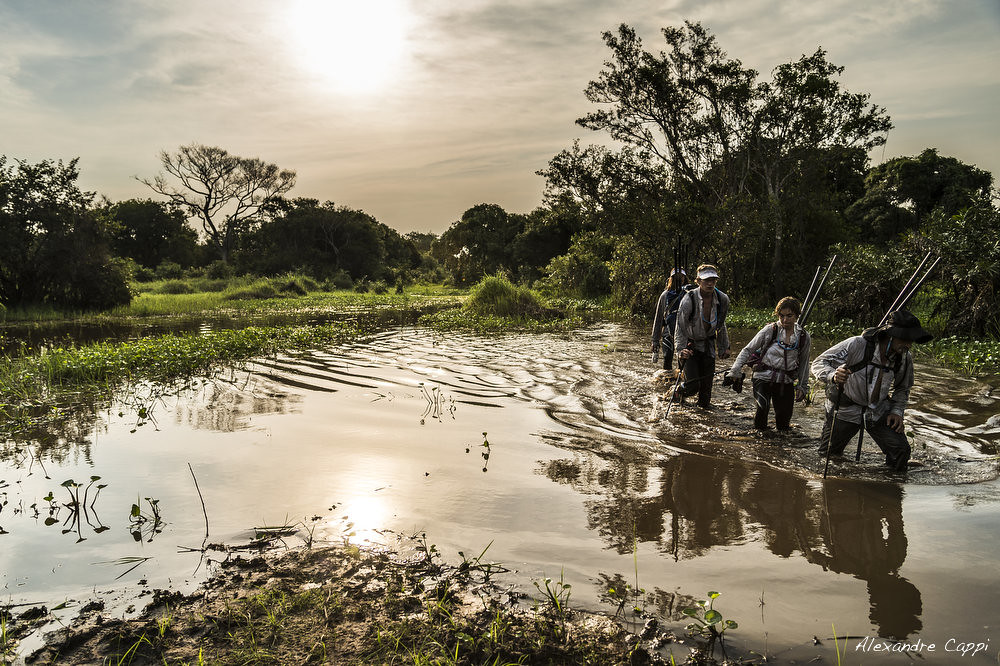
Team Seagate from New Zealand was the favorite coming into the event, and they did not disappoint. The squad took first place at Patanal Pro, the host event for this year's AR World Championship. The Kiwi's finished with a time of 6 days, 16 hours, 44 minutes, which fast enough to put them seven hours ahead of second place team Hagl�fs Silva of Sweden. Third place went to team SAFAT, also of Sweden, who finished another five hours back.
At the start of the race back on November 15, there were 30 teams set to compete. Only five managed to run the entire course, with 17 other teams continuing on a short course, while 8 others retired from the event. Two additional teams continued on unranked after losing one of their four-person squad.
As usual with adventure racing, the ARWC required coed teams of four to trek, mountain bike, and kayak through a remote course using only a compass and map to navigate between checkpoints. In this case, that remote course ran through the Patanal region of Brazil, which is the largest wetlands area in the world. The dense forests found there are reminiscent of the Amazon, although the terrain varies to a higher degree.
Congrats to the champs who have proven once again that they are the top team in the world. Hopefully we can lure them to come compete in Expedition Alaska in the future.
Langganan:
Postingan (Atom)