Senin, 16 November 2015

New Virtual Reality Experience Will Take You to the Summit of Everest

One of the hottest trends in technology at the moment is virtual reality, with 2016 set to be the year that the long-promised VR experience will finally come into its own. To meet the demands of this new audience, a number of companies are already creating cutting-edge virtual reality experiences, including games, movies, and interactive simulations. Last week, it was announced that one of those simulations would allow us to scale the tallest mountain on the planet � in stunning high resolution � without ever leaving home.

At a tech conference held in San Francisco, an Iceland-based media studio called S�lfar unveiled the first look at Everest VR, a virtual reality experience that will allow viewers to travel to Nepal, and climb the mountain from the south side. While not a whole lot is known about the program just yet, a blog post on the NVIDIA website describes the experience this way:
"Cross the treacherous crevasses of the Khumbu Icefalls. Scramble up the icy Lhotse Face. Weave your way up the path of the Hillary Step, poised on a knife-edge between icy slopes and rocky cliffs. Finally, reach the summit of Mount Everest for a stunning view from Earth�s highest point."
In other words, it sounds like this will be a highly detailed experience that will start in Base Camp and allow you to scale the mountain, visiting the well known mountaineering landmarks along the way, all without the need to carry bottled oxygen.

S�lfar is working in conjunction with a special effect company called RVX, which helped recreate the impressive visuals in the Everest film that was released in theaters a few months back. If you've seen that movie, you know what to expect from the VR program to a degree, although I would expect you'll have lots of freedom to explore the mountain. In fact, RVX reportedly used more than 300,000 high-resolution images to create the virtual mountain, bring a high level of realism to the simulation. For many of us, it will probably be the closest we come to actually getting the chance to climb the peak, so it should be a very interesting experience to say the least.

It is unclear exactly when Everest VR will be available, but considering most of the highly anticipated virtual reality hardware isn't going on sale until next year anyway, it seems likely it'll ship to the public around the same time as the Oculus Rift. Considering how this new wave of VR is being lauded for its realism and sense of scale, this should be quite the showpiece for the new technology.

Check out teaser trailer for Everest VR below.


National Geographic Announces 2015 Adventurers of the Year

It is that time again. National Geographic has announced their picks for the 2016 Adventurers of the Year, with some familiar faces earning a spot on the list. Many of these men and women are people that we've followed here on The Adventure Blog, with some surprise picks to go along with those that are a bit more obvious and expected.

Falling into that latter category, I'm sure no one will be surprised to hear that Tommy Caldwell and Kevin Jorgeson made the cut. After all, these two men held the world spell bound last January as they climbed the incredibly difficult Dawn Wall in Yosemite. Their climb took 19 days to complete, and for much of that time rock climbing gained widespread mainstream media attention, something that doesn't happen very often.

Others who earned the title of Adventurer of the Year in 2015 include a female team of cyclists in Afghanistan who are breaking new ground, long-distance kayaker Freya Hoffmeister, who completed her circumnavigation of the South American continent, and skies Chris Davenport, and Christy and Ted Mahon, who became the first people to make ski descents of all 53 14ers in Colorado. Scott Jurek also made the list for his speed run along the Appalachian Trail, as did Ben Stookesberry, Chris Korbulic, and Benny Marr for their first descent by kayak of a river in Papua New Guinea.

As usual, these men and women are incredibly inspiring, and demonstrate a commitment to pushing the limits of what we believe we are capable of accomplishing. They are climbers, paddlers, explorers, conservationists, cyclists, and so much more. You can check out the entire list here, and vote for your pick for the People's Choice Adventurer of the Year by clicking here. The winner of that category will be announced in February.

Also get a look at these amazing people in the video below.


Antarctica 2015: Worsley Underway, Others to Soon Follow

After a slow start to the 2015-2016 Antarctic season, things are beginning to pick up steam now. Improved weather has allowed Union Glacier station to become full operational, with more flights now scheduled to the camp to begin delivering explorers and adventurers to the ice. Soon, there will be a number of teams skiing to the South Pole, with a busy season ahead.

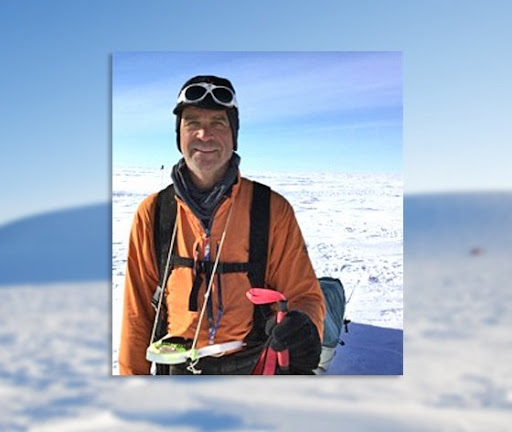
First out of the starting gate is Henry Worsley, who has now been on the trail for three days, and is already making good time. His starting point at Berkener Island has been left behind as he cranks up the milage despite warm temperatures making the surface soft and slushy. That isn't great for skiing, but Henry will enjoy the warmer weather while he can. As you probably recall, Worsley is attempting to traverse the continent solo and unassisted. His journey will take him to the South Pole and than out to the Shackleton Glacier near the Ross Ice Shelf. It is expected to take him about 80 days to wrap up the entire journey, which will cover more than 1770 km (1100 miles).

Just a few days into the expedition and he has already hit his first milestone. Today, Henry skied past the 81st degree, which means just nine more degrees to go before reaching the Pole. Not all of those will come so quickly though, and it'll probably be awhile before he reaches the 82nd degree. Still, he'll take the progress and is enjoying a small celebration at being out on the ice at last, and making his way south.


Meanwhile, Italian polar explorer Michele Pontrandolfo is preparing to embark on his Antarctic expedition for this season. ExWeb says that he'll attempt to kite-ski across the frozen continent, starting at Novolazarevskaya Station, and then proceeding to the South Pole of Inaccessibility, before going on to the Geographic South Pole, and eventually ending at Hercules Inlet. The route will cover approximately 3620 km (2250 miles) which he'll do solo, but wind assisted of course.

Michele has been in Cape Town for several days now and is waiting a flight out to Novolazarevskaya. Poor weather has kept the aircraft grounded however, so it is unclear when he'll actually get to start. The hope is that he will be able to travel to Antarctica sometime this week.

Yesterday, the Shackleton 2015 team arrived in Punta Arenas, where they are now organizing their gear in preparation for the expedition ahead. As the name of the team implies, they'll be following in Shackleton's footsteps in the Antarctic by traveling for more than 2100 km (1300 miles) as they ski from Weddell Coast to the South Pole, and back. The trip is expected to take about 60 days to complete. There is no indication of when they'll fly to Union Glacier, but if the weather holds it could be within a few days.

Finally, Mustafa Salameh, the first Jordanian explorer to summit Everest, is also preparing to ski to the South Pole. He is putting the final touches on his preparation now, and departed Amman yesterday to embark on this journey. As with the other teams, there is no word yet on when he'll fly to Antarctica, as he'll need time to pack and organize his gear, and catch a flight when the weather permits. But we'll be keeping a close eye on his progress throughout the season ahead.

As you can see, things are starting to crank up now. It won't be long until the season is well underway with numerous teams speeding towards the South Pole. Expect much more news to follow in the days ahead.


Jumat, 13 November 2015

Video: Two Eagles Attack a Drone Mid-Flight

It seems not everyone is enamored with drones. Case in point, in this video filmmaker Patrick Pircher was using his DJI Phantom 3 to capture some great video of the surrounding landscape when two eagles decided to attack his small aircraft. They did manage to take it down, but it appears that the drone survived the assault. The camera that it was carrying managed to capture some memorable footage in the process.

Video: Ground Up: A Vermont Climbing Story

When we think of great climbing destinations, Vermont isn't a place that typically comes to mind. But, it turns out the state has some interesting things to offer climbers, if they are willing to look hard enough. This video takes us there to see first hand some of the routes that are available, many of which have been opened thanks to the tireless work of two men who decided to help develop Vermont's climbing scene over the past two decades. As you'll see, it is a story that reminds us that we can help pave the way for other outdoor adventurers to follow.

Ground Up: A Vermont Climbing Story from Outdoor Gear Exchange/Gearx.com on Vimeo.

Researchers Explain Why Sherpas Make Great Mountaineers

Researchers from the University Hospital Southampton in England have determined exactly why Sherpas make such great mountaineers, and as you would expect their his a biological reason behind their impressive performance in the mountains. Back in 2013, a group of scientists calling themselves Xtreme Everest, traveled to the Himalaya to explore what makes the Sherpas different, and their findings were revealed last month at medical conference in London.

The research team discovered that the mitochondria inside a Sherpa's body are far more efficient at processing oxygen than they are in the rest of us. These tiny organelles are found in our cells, and help to generate energy that keeps us moving, burning oxygen in the process. For Sherpas, the mitochondria have evolved to work much more effectively, helping them remain strong at high altitudes.

Additionally, the Xtreme Everest team's research revealed that the Himalayan people had much more efficient blood circulation as well, which helped to carry oxygen throughout their bodies. For most of us, blood flow tends to slow down when we reach high altitude, but in remains relatively unchanged in the Sherpas.

The ultimate goal of the research program is to help mountaineers to survive altitude sickness, and perhaps even learn to be more efficient at higher elevations as well. By studying the physiology of the Sherpas, doctors are seeing how their bodies work differently from those who visit the Himalaya from other parts of the world. What they found is that the efficiency of their bodies goes well beyond simple acclimation. Having lived in the High Himalaya for centuries, they have actually evolved and adapted to that environment, making them better suited for working and living at such high altitudes.

For those of us who have interacted with the Sherpa people, these findings probably don't come as much of a surprise. Seeing these incredibly strong men and women in action is a sight to behold, and incredibly humbling at times. Anyone who has been to the mountains in Nepal has probably found themselves huffing and puffing while going up the side of a mountain. Meanwhile, a Sherpa will whisk past you carrying a load that is three times heavier than the one you have on your back, while wearing flip-flops. That is not an uncommon scene on the trekking routes their, and certainly helps to provide an appreciation of what the Sherpa people are capable of.

The Xtreme Everest study has identified what helps to set the Sherpas apart, but the research isn't quite done yet. Next they'll look at their genetics to see if there are differences on an even more granular level. No matter what they find however, it is obvious that the Sherpa people are the true heroes of the mountaineering world.

Outside Publishes 2015 Holiday Gear Gift Guide

As the end of the year draws nearer, the holidays are also now in sight. That means it is time to start thinking about what you'd like to give the outdoor enthusiasts on your list this season. To help out with that dilemma, Outside magazine has published its 2015 Holiday Gift Guide, with more 113 products that they recommend for the gear hound in your life. 

The guide is broken down into various categories, including adventure, fitness, tech, travel, and so on.  Each of those broad sections is further subdivided with specific categories that fall under each of those headings. For instance, under the category of "adventure" you'll find options for the best backcountry tools and toys, big gifts that float on snow and water, and 8 gifts for those who have been exceptionally good this year. Each of the other sections are similarly broken down into subcategories as well.

As you can imagine, the gear items that Outside recommends vary greatly in price and size. Some of the products that they recommend include the Goal Zero Flip 10 portable battery for keeping your gadgets charged, the GoPro Hero 4 Session action camera, and the Eddie Bauer First Ascent Maximus Duffel. Other items that get the Outside editors seal of approval range from an axe from United By Blue, to a fitness monitor from Fitbit. You'll also find Smartwool's PhD Propulsion Hoody on the list, as well as Keen's new The 59 boot. 

If you're just getting ready to start your holiday shopping, and you're looking for some good suggestions for your outdoor adventurer, there are plenty of options to choose from on this gift guide. Better yet, if you're one of those people who are difficult to buy for, and always have people asking you what you want, choose a few items from the list or just send the link to those who are shopping for you. Chances are, you'll come away with something great to add to your gear closet.