We've only just returned from a bit of a holiday break, and its time to hit the road once again. Tomorrow, I'll be headed off to Salt Lake City to attend the 2016 Winter Outdoor Retailer show where I'll get a chance to take a look at the newest outdoor gear scheduled for release later this year.
The show itself doesn't actually begin until Thursday, but I'll be joining a few other media folks on an overnight camping excursion tomorrow before some of the official festivities begin on Wednesday. This means that once again, updates are likely to be sparse for the week ahead, at least here on the blog itself. I will be sharing thoughts and images from the OR show floor on my Twitter feed, as well as on The Adventure Blog Facebook page. Follow either of those to catch a glimpse of some of the best new gear that I come across along the way.
If you'd like to read a preview of what to expect from the show, I've written three of them that will be going up at Gear Institute over the next few days. The first one is live now, and the others will follow on Tuesday and Wednesday. Each takes a look at ten interesting items that will be revealed at the event.
Hopefully things will get back to a normal pace around here next week. It's time to get focused on 2016, and some of the fun adventures ahead. Thanks for your patience and understanding.
Tampilkan postingan dengan label General Adventure. Tampilkan semua postingan
Senin, 04 Januari 2016
Video: Meet the Nomads of Mongolia
Life on the Mongolian Steppe is hard, but it is also steeped in tradition. The nomadic people that live there have been wandering that part of the world for centuries, and while modern amenities have made their life a little easier, they still very much continue to live as their ancestors have. In this beautiful video, you'll travel to the Steppe, where you'll get an up close and personal look at these nomads. They are an amazing people living in an amazing part of the world.
Nomads of Mongolia from Brandon Li on Vimeo.
Kamis, 31 Desember 2015
Outside's Top 10 Adventures of 2015
Our end of the year review and wrap-up continues today, this time with a list from Outside magazine of the 10 most badass adventures of 2015. As you can tell from the title, the list is made up of some of the most daring and audacious expeditions from the past 12 months, some of which you may have forgotten about, or slipped under your radar altogether.
The first entry should come as no surprise to anyone. It is Tommy Caldwell and Kevin Jorgeson's ascent of the Dawn Wall, which tops my list of the best adventures of 2015 for a number of reasons. First and foremost, it was an incredible climb up one of the hardest routes on the planet, but going beyond that it also managed to captivate an audience that went well beyond the normal climbing crowd. It will be difficult for anyone to match this climb in 2016, or for years to come.
Other expeditions that got the nod from Outside include an attempt at the first ski descent of Makalu, Lonnie Dupre's solo summit of Denali in January, and Will Gadd's climb of the frozen Niagara Falls, which was also a first.
I won't spoil the entire list, as obviously part of the fun is finding out what Outside deemed worthy of sharing, as well as being reminded of the interesting adventures from the year that has passed. But it is safe to say however, that each of the entries in the article are certainly deserving of the "badass" label, and will inspire you to think about some of your own adventures for 2016.
Start the slideshow by clicking here.
Senin, 28 Desember 2015
Video: The Year in Review with GoPro
It was another good year for GoPro. Not only did the company release a series of excellent new cameras, the footage that was captured on those devices continued to improve and become more refined. This video takes us on a 4+ minute look review of the year as seen through the lens of a GoPro camera, with some fantastic shots of some amazing places to remind us of all that took place in 2015.
Kamis, 24 Desember 2015
Happy Holidays From The Adventure Blog
I just wanted to take this opportunity to wish all of the readers of The Adventure Blog a Happy Holiday Season! It has been another great year, and I couldn't continue to write this humble little blog without you dropping by on a regular basis. I appreciate everyone who spends some time keeping up with all of the things I write about. I hope 2015 was great for all of you, and 2016 is even more adventurous.
With Christmas now upon us, and the end of the year in sight, the posting schedule will probably be a bit erratic over the next week or so. I'm sure there will be a few updates during that time period, but just like the rest of you, I'll be enjoying some time with friends and family. Things will get back to normal early in 2016, as we resume our coverage of the world of exploration and outdoor adventure. Until then, have a safe holiday season, and I'll be back soon.
Rabu, 23 Desember 2015
Video: Falling Drone Nearly Hits Skier
We all know that drones can be great tools for filmmakers, and that their potential is fantastic. But what about when they malfunction? Yesterday, Austrian skier Marcel Hirscher was taking part in the Alpine Skiing World Cup in Italy when he was nearly struck by a drone that was filming the competition. As you'll see in the video below, the small, unmanned aircraft plummets to the ground a split second behind Hirscher, who narrowly escapes disaster. Thankfully, no one was hurt. Well, except for the drone owner, who probably wasn't too happy with the crash.
Selasa, 22 Desember 2015
Skydiver to Jump From Stratosphere Without a Parachute, Spacesuit, or Oxygen
I had a curious email arrive in my inbox this morning. It announced an insane event that is scheduled to take place on March 25, 2016 at an as yet undisclosed location. That is when an unknown skydiver will reportedly leap from an airplane at 50,300 feet (15,331 meters) without wearing a spacesuit, oxygen mask, pressure suit, or parachute. They'll then plummet from more than nine miles up, into the ocean, in a place that is said to be teeming with great white sharks. The entire thing will be aired online as a pay-per-view event that will be sold for $15, with VIP tickets available for purchase for those who want to witness this strange occurrence live. Oh, and did I mention that the team behind this also claims to being doing it to raise awareness of water-related diseases which claim the lives of a child somewhere in the world every 60-90 seconds?
The even is being billed as the Death Challenge since the person making the jump seems to have very little chance of survival. After all, how is it possible that someone could fall from more than 50,000 feet up without a parachute and hope to survive? I suppose the organizers of the event are using that as selling point to get as many people to tune in as possible � at $15 a pop � with the morbidly curious hoping to see someone actually perish.
As if that wasn't enough, there will apparently be several "lifelines" that people watching on the Internet will be able to vote for or against. Those lifelines will reportedly offer the skydiver some things that could save his or her life, although ultimately it will be the audience that decides whether or not they receive them. Just what those things are has yet to be revealed.
The information I was sent about this event doesn't share the name of he person who is actually making the skydive. They only refer to him or her as "The Challenger." Why the shroud of mystery? That isn't clear, but I suspect it's because they don't actually have someone who is willing to commit to making the leap just yet, so their hedging their bets without sharing a name.
I have to admit, I was very hesitant about writing about the "Death Challenge" at all. On the one hand, this seems like a dangerous and stupid event that must surely result in someone either dying or getting severely injured. On the other, it is being billed as a way to raise awareness of an important issue, so I'm not really sure what to believe. All I know is that this "challenge" is marketing being pushed to the extreme, with the hopes of pulling in cash from those that can't wait to see someone else get injured or killed.
I've got to believe that there is something that the marketing for this event is not revealing just yet. Some way that the person who is jumping out of the aircraft will actually survive the fall. Perhaps they'll have a jetpack or special wingsuit to help with the descent. We all know that it is nearly impossible to survive a fall from that height without some kind of aid, even if you are landing in the water. After that, any sharks that are swimming nearby are least of the person's worries, as they're unlikely to attack a person anyway.
So, is this a marketing ploy taken to the extreme? A real event that is incredibly crazy? Something in-between? I guess we'll have to wait to learn more, but it certainly sounds very dubious to me.
Senin, 21 Desember 2015
The Latest Plan to Jumpstart Nepal's Tourism Economy? Slash Insurance Costs For Mountain Expeditions
We all know that Nepal has suffered greatly since the April 25 earthquake that left parts of the country in ruins. It has been a long, difficult struggle to even begin the rebuilding process, with some areas still waiting to see any positive results. And beyond the physical damage that is still being cleaned up, the Nepal's economy has suffered greatly, no small part thanks to the adventure travel market taking a nose dive in the wake of the disaster. But now, the Department of Tourism there has come up with a plan to help revive the economy, and it involves cutting the costs of a trip at the expense of reducing the price of insurance for guides and porters, with premiums dropping accordingly as well.
According to Bahadur Karki, the head of the Nepali Department of Tourism, a proposal has been sent up the ranks in the government that calls for a substantial reduction in the costs of both rescue and health insurance for workers who are taking part in a trekking or mountaineering expedition to any of the 188 peaks that are below 6500 meters (21,325 ft). The DoT has recommended that insurance premiums be reduced to $3000 for guides and porters, and $2000 for Base Camp staff. Furthermore, rescue insurance is being dropped from $10,000 down to $4000 for anyone on those expeditions as well.
In other words, this means that should something happen to the staff on an expedition, the payout that they receive would be cut dramatically. $3000 for guides and porters who could be sidelined by an accident is not much money, and could leave their families scrambling to pay for medical bills and covering their bills while the person recovers. Worse yet, if a helicopter is used to extract that person from the mountain, only $4000 of the bill will actually be paid. Considering how expensive it is to take a helicopter flight, that won't even come close to picking up the tab for such a rescue, which can easily exceed $10,000.
The thought behind these reductions in costs is that the savings can then be passed on to travelers, who will now be able to visit Nepal, and climb or trek in the Himalaya, for less money. The hope is that this will spur a return of visitors in the spring of 2016, when Everest climbers are expected to return in large numbers, and trekkers will be hiking throughout the region too.
As you can imagine, the guides, porters, and staff who take part in expeditions that are seeing a reduction of insurance costs aren't very happy with proposal. Following an avalanche that claimed the lives of 16 people on Everest in 2014, there was a movement to increase insurance benefits for workers. That was further enhanced this year when another 22 people were killed on the mountain following the earthquake. While those working on Everest wouldn't be impacted by these changes to the insurance costs, there are thousands of others who could be. There are a lot of climbs and treks that the place on the smaller mountains, but the dangers they face remain high.
It's obvious that the government of Nepal is desperate to jump start the economy and get visitors flowing back into the country. That will obviously take some time to happen, but they with so much work to be done, and so many people still without homes, officials are looking for solutions now. The problem is, this isn't a good solution. While it may make it cheaper for visitors to travel through the country, it is doing so at the expense of people who have already suffered greatly. If the they truly wanted to reduce the cost of climbing or trekking in Nepal, why not examine the price of permits instead? That would also have an impact on many workers, and on the governments bottom line, but at least it wouldn't be putting the future of many people in jeopardy the way slashing insurance benefits could. But then again, this is the government of Nepal we're talking about here. They're not exactly well known for making wise decisions when it comes to governing the country.
Thanks to Stefan Nestler's Adventure Sports Blog for sharing this story.
Jumat, 18 Desember 2015
Outside Predicts the Trends of 2016
We sill have a couple more weeks to go before we drop the curtain on another year, but it is never too early to start looking ahead to 2016. With that in mind, Outside magazine has published an interesting article, in which the editors look into their crystal ball and make some bold predictions on the trends that will leave their mark next year.
Some of these predictions are fairly easy to make. For instance, Outside says Cuba will live up to the hype amongst travelers, and fitness trackers will continue to grow in popularity. Other items on the list are bit more of a stretch. I'm not sure that anyone will be able to run a marathon from their living room for example, and while bike-packing is on the rise, it won't supplant backpacking just yet. Outside also says that 2016 will be the year that private space travel finally comes into its own, but considering how long such a thing has been promised, I'll believe it when I see it.
Still, it is fun to take a peek over the horizon and think about the people, places, and things we'll be watching closely next year. The Olympics will take place in Rio, which will bring us a host of new athletes to admire, and there has definitely been a trend towards outdoor adventure showing up in popular media � including movies, books, and even virtual reality. All of those options will give us something to keep us occupied when we're not pursuing adventures of our own.
I won't go out on a limb and make too many predictions. I'll leave that to the experts at Outside. But I will say that I expect things to finally get back to normal on Everest after two seasons of disruptions. I also expect that there will be some bold new adventures to report on, many coming from sources we don't even know about yet, and I'm sure we'll see even better gear and equipment to get us through our personal explorations of the world around us. In short, 2016 will be like most other years. Lets all embrace it and make the most of it.
Rabu, 16 Desember 2015
Gear Closet: The BloomSky Weather Station
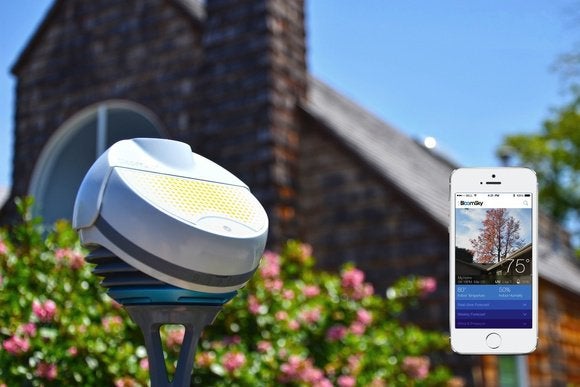
As outdoor enthusiasts, the weather often plays a major role in determining when we can and can't go outside to enjoy the activities the we love so much. If you're like me, you probably spend an inordinate amount of time checking the forecast and current conditions to help to determine when is the best possible time to be outside, and just how you should dress for the occasion. At times, you might have even wished that you could own your own personal weather station that could provide updates and information on the conditions that exist right outside your door. Well, if that has ever been something you've dreamed of, than you're definitely going to want to take a look at BloomSky, a device designed to provide accurate weather information and a whole lot more.
Packed with a host of high-tech sensors, BloomSky is a device that you set up outside your home, office, or other location to record and share weather data. It can detect temperature, humidity, barometric pressure, the current level of UV radiation, and precipitation. That information is than shared directly with you via a smartphone app, which can also be configured to provide alerts based on changing conditions.
As if that wasn't enough, the BloomSky weather station also features a built-in camera, which can be accessed via the app as well. The camera can provide a wide-angle image of the sky or the area that surrounds the device at any given time during the day. Those images are even saved up as the hours pass, providing a nice time-lapse video of how things unfolded from dusk until dawn.
Setting up the BloomSky is a breeze, and takes just a matter of moments. Do to so, you must first download the app to your iPhone or Android phone, and create an account. Once you've done that, you'll be able to manage your devices, giving it its own unique name and configuring a few basic settings. The most important of those settings is granting it access to your WiFi network, which is how the weather station shares its data. That means that when you pick a spot outside, it also has to be within range of a wireless network, otherwise you won't be able to connect to it.
Fortunately, the BloomSky comes equipped with a high quality WiFi chip that seems to have solid range. I configured mine to my wireless router, than took it outside to set up in the yard. It immediately started broadcasting weather data and even some images of my ugly mug up close to the camera as I installed it. The entire process took less than five minutes, and before I knew it my personal weather station and camera system was in place, and broadcasting to the world.
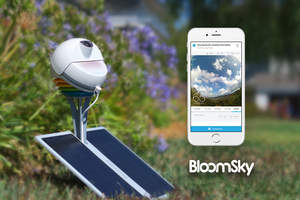
The BloomSky device also features a built-in rechargeable battery that keeps it powered for up to two weeks at a time. But, there is also an optional solar panel that can be connected to the unit to provide a constant source of power. That's the method I've been using to keep my weather station operational, and it seems to be working like a charm. The BloomSky app provides an on-screen indicator of current battery life, and mine hasn't wavered a bit since installing it.
In addition to providing current weather conditions for yourself, there is also a bit of a social element to BloomSky. When you set up the device, you can opt to have its data shared publicly, or make it private so only you see it. Most users are sharing their data, and as a result there is a growing network of BloomSky weather stations across the globe. This gives you the option to search for different locations within the app, allowing you to check the weather in many parts of the world, complete with an image from the camera onboard those other BloomSky devices. To get a sense of where these weather stations are located, take a look at this real-time map that is constantly being updated with new locations. You can also get a sense of where the devices are installed by following the BloomSky Instagram account, which includes some great shots of cameras too.
The BloomSky app is a pretty easy to use, straight forward affair. When launched, it takes you straight to your own device, but also lists other that are nearby as well. Tapping on your personal weather station � or one of the other son the list � gives you more information, including an hourly forecast for the day, and the outlook for the rest of the week, for the place that the device is located. It also allows you to share data via social networking, and gives you the option to save other BloomSky devices to your favorites.
As much fun as having your very own weather station is, the BloomSky isn't without its faults. For instance, the data it provides to you comes in raw numbers, which out of context isn't always helpful. Sure, the temperature and humidity numbers are pretty self explanatory, but barometric pressure is more useful if you know whether or not it is rising, falling, or is stable. I would like to see that option added in the future. The UV radiation indicator was originally a number as well, which meant absolutely nothing to the layman. But now, it has been replaced with a much more useful low, medium, or high rating. Additionally, the app was a bit unstable when I first started using it, but a recent update to fix some bugs seems to have ironed out those issues.
I'd also like to see some kind of history added to the app as well. As it stands, the data is transitory, disappearing as the day goes by. But being able to keep the data and analyze it over time could prove helpful. BloomSky could even grow to the point that it is providing long-term analysis of weather and climate change from across its global network. At this point, that doesn't seem likely though. I also wish that the device had some kind of wind speed indicator and a rain gauge to know just how much precipitation you've had over a certain period of time.
The app also seems to only be available for smartphones at the moment. I'd really like to have it be an option on my iPad as well however. Better yet, I'd like to see a BloomSky app for the new Apple TV as well, allowing me to check conditions and watch the time-lapse videos on my big screen. I'm not sure how likely that is to happen, but it sure would be nice.
That said, there are some nice features about the BloomSky that I really like. I appreciate that it sends me a notification when it starts to rain for instance. I also love the time-lapse videos that it creates each day, and the ability to save them for future viewing should something truly interesting get caught on camera. On top of that, there i something quite satisfying about having your own weather station out in the backyard, providing you realtime data about what is happening around you.
If you have a weather-obsessed person on your holiday shopping list, this would be quite the gift to find under the tree this year. The BloomSky is sold in several different packages, including the basic model which features the weather station by itself. That unit typically sells for $199, but is currently on sale for $149. Additionally, the package that includes the solar panel to power the device typically goes for $337, but is now just $186. That's a heck of deal, and is the one that I would personally recommend, as once it is configured and installed, you can pretty much forget about it. You can see all of the holiday specials, as well as options for mounting the device on a deck, as well as buying the solar panel separately, on the BloomSky online shop.
The bottom line is that this is a unique and fun piece of technology that has a lot of potential. I already enjoy watching the weather from my device, and searching for other stations in different locations around the world. As the product and the app continue to be refined, I think we'll see even more functionality show up from BloomSky, but even now it is a nice option to have at your disposal.
Selasa, 15 Desember 2015
NASA is Now Accepting Applications for Astronauts!
Have you always dreamed of becoming an astronaut? Do you see traveling through space as the ultimate adventure? Well, today just might be your lucky day, because for the first time in more than four years, NASA has begun taking applications for prospective astronauts to join the U.S. space program, potentially making a lifelong dream come true for a few lucky people.
You can read the full job description � and start the application process � by clicking here. As you can imagine, there is a lot of interesting information to be found there. For instance, did you know that the salary range for an astronaut candidate is between $66,026.00 and $144,566.00 per year? And of course, the "openings" for this position are in Houston, Texas, which may be viewed as a downside of this job. Still, if accepted you could be in line to go into space and potentially live aboard the International Space Station or take part in another manned mission at some point.
The application indicates that there are now more manned spacecraft in development in the U.S. than at any other time in history. In fact, astronaut candidates could travel not just on the ISS, but two commercially developed spacecraft, as well as NASA's very own Orion deep-space exploration vehicle which could one day take us to Mars.
Obviously the competition for the few astronaut positions that are open will be tough, and the vast majority of us have no chance. But, you never know what kind of people NASA will be looking for to take part in the next phase of manned space flight. Those with backgrounds in science will obviously be best suited for the job, but those with experience in technology, aviation, exercise physiology, and nursing are also encouraged to apply.
There is a lot more to the job description and application process, so if you're interested, I'd encourage you to read more about the requirements. Even if you know you're not bound for space, it still makes for an interesting read.
Senin, 14 Desember 2015
Video: Behind the Scenes on an Adventure Photography Shoot
We've seen some pretty impressive videos recently that follow adventure photographers as they head out into the wild to capture the perfect shot, and today I have another one for you. This latest short film comes our way courtesy of my friend Wouter Kingma, who works with with adventurers and outdoor athletes to capture them doing the things they love most. On a recent photoshoot, he traveled through the UAE and into Oman with a group of athletes who hiked, climbed, mountain biked, road cycled, camped, went trail running, and so much more. This video shows us how it all came together, and what it is like behind the scenes for an acclaimed adventure photographer. Those of us who are aspiring photographers ourselves will certainly enjoy the clip.
Jumat, 11 Desember 2015
10 Tough Old School Explorers and Adventurers
You think today's explorers are tough? How do you think they compare to some of the toughest in history? All things considered, modern gear, satellite communications, and better training have all helped to give today's adventurers a leg up on those from the past. But lets face it, some of the pioneers of exploration were incredibly resilient, resourceful, and darned near impossible to kill. You'll find a lot of men who resemble that description on Popular Mechanics' list of the 10 toughest old school explorer and adventurers, including a number of figures that we have written about on occasion on this blog.
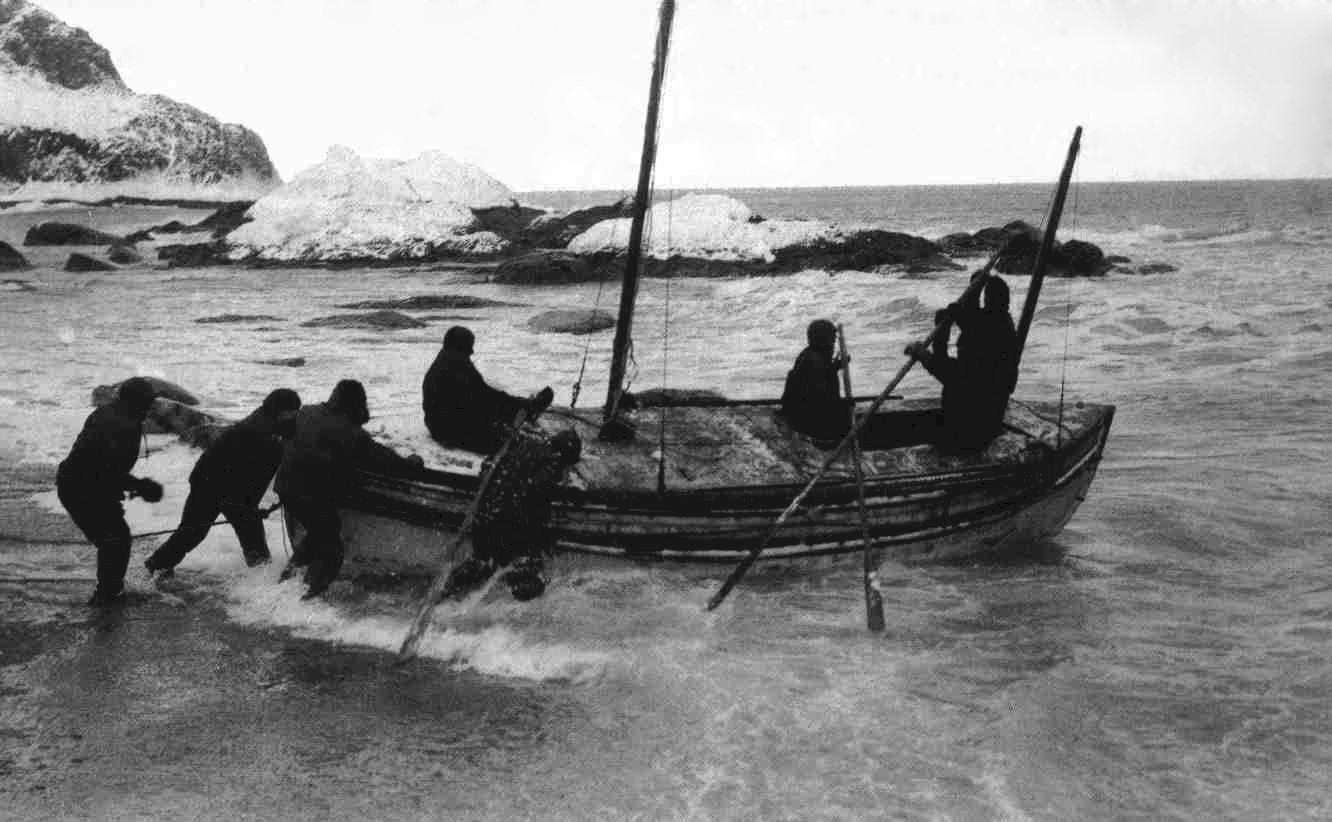
I won't spoil the whole list for you, but to give you an idea of the type of man we're talking about here, Ernest Shackleton rightly earns a spot amongst this pantheon of incredibly tough men, as does Douglas Mawson, both of whom are polar explorers of course. Others making the list include Tenzing Norgay, who was with Edmund Hillary when they both were the first to summit Everest, and Hugh Glass, who is the subject of the new movie The Revenant starring Leonardo DiCaprio. Glass is best known for surviving bear attack while exploring the American west, only to drag himself 200 miles over open country after he was left for dead by his companions.
Of course, there are other great examples of explorers and adventurers surviving incredibly wild experiences to come back and tell their tales. This list has six others that are certainly worthy of mentioning as well. The article is worth reading just to here a brief synopsis of each of their stories, but you'll probably eventually want to just find out more about each of them when you can.
And who did they leave off the list? As one commenter says, what about Roald Amundsen whose polar journeys are the stuff of legend. Or Thor Heyerdahl who sailed across the South Pacific on a tiny boat called Kon-Tiki? Who got snubbed, and probably should have made the cut?
Rabu, 09 Desember 2015
North Face Founder Doug Tompkins Dies in Kayaking Accident in Chile
There is sad news for the outdoor adventure community today as it was announced last night that Doug Tompkins, the founder of The North Face, has passed away in a kayaking accident that took place in Chile. He was 72.
According to reports, Tompkins was on a kayaking trip in the Patagonia region of South America. He, and several others were paddling across General Carrerra Lake in high winds and strong waves, when six members of the team, including Tompkins, capsized. They were all waters that were below 40�F (4�C) for an extended period of time, which led to Tompkins eventually passing away due to extreme hypothermia.
Doug founded The North Face back in 1964 as a local gear retail shop in San Francisco. Later, he would also found the Esprit clothing company as well. Both would grow into billion dollar empires. Tompkins retired from the business back in 1989, and moved to Chile where he purchased thousands of acres of land, both in that country and Argentina. Most of that land was turned into a private nature reserve to help keep the Patagonia region free from developers.
Tompkins' legacy will of course be The North Face, and his important work in conservation. But in 1968 he was part of a four-man team that spent six months traveling to Patagonia and climbing there. He and the team put up a new route on Fitzroy, and documented their efforts in books and films. One of the other members of that squad included Yvon Chouinard, who would go on to form Patagonia and also go to great lengths to help preserve the natural landscapes of Chile and Argentina.
None of the other members of Tompkins kayaking team were seriously injured in the accident. Unfortunately, he succumbed to hypothermia in the intensive care unit of a Chilean hospital. I wish to extend my sincere condolences to Doug's friends and family. He will certainly be missed.
Senin, 07 Desember 2015
Video: Go Anywhere!
This video strings together some amazing clips of nature, landscapes, and scenes from the world around us to convey the simple message that we should get out there, live our lives, and pursue our passions. It is a stunning visual source of inspiration that will leave you wanting to get up off your chair, get outside, and go visit that place you've always wanted to see or do that thing that you've always wanted to do. Life is short, take advantage of it while you can, and don't let any opportunities for adventure pass you by.
Go Anywhere from Story & Heart (Licensing) on Vimeo.
Rabu, 02 Desember 2015
On The Road Again - Heading to the Caribbean
Just a quick note to let everyone know that I'll be traveling again over the next few days. I'm headed to Antiqua and Barbuda on assignment. While there, I'll be exploring everything these Caribbean islands have to offer in terms of adventure, while of course soaking up a bit of sun in the process.
That means there likely won't be any updates for the remainder of the week, although I'll be back to my normal posting schedule next Monday. In the meantime, take the opportunity for the remainder of this week and the weekend ahead, to get outside and enjoy some of your own adventures too. Fall is starting to run short here in the northern hemisphere, and we should take advantage of it while we can.
Back soon!
Selasa, 01 Desember 2015
Climate Change: 2015 to be Warmest Year on Record
As world leaders gather in France to talk about climate change, the impact it is having on our planet, and what can be done about it, we received sobering news a few days back when it was reported that 2015 is on track to be the warmest year on record.
According to the World Meteorological Organization data collected through the end of October shows that the Earth is on course for the warmest 12 month period since researchers first began keeping records more than 135 years ago. Worse yet, studies also say that the period from 2011-2015 is the warmest ever recorded as well, which shows that this is an ongoing trend.
When compared to historical records that date back to 1880, it appears that on a global level we are now averaging temperatures that are approximately 1�C warmer than they were back then. That might not seem like a lot, but it is enough to begin shifting global weather patterns, melting ice caps, and causing ocean levels to rise.
The increasing temperatures for 2015 are blamed on the continued emission of "greenhouse gases" such as carbon dioxide, and a strong El Ni�o, which is still ramping up in the Pacific. The so called Godzilla El Ni�o is expected to impact weather patterns world wide, causing ocean temperatures to rise, and creating major storms in North America. Meanwhile, just about every corner of the globe has recorded its warmest year ever, with the trend of increased temperatures looking to continue.
All of this does not bode well for our planet, nor the outdoor spaces that we all love so much. If the trend continues, those snowcapped peaks that we enjoy climbing could become a thing of the past, and we already know that most of the world's glaciers are in a full retreat. So, while the world's leaders look for solutions to this problem, we should be doing the same. Think about the things you can do in your life, or around your house, that could make a difference. Every little bit counts, and climate change is something that is going to have an impact on all of us, sooner or later.
Senin, 30 November 2015
One Last Thank You to Mountain Khakis
I know I've mentioned Mountain Khakis a number of times over the past few weeks, but as November draws to a close, I want to do it one more time. The company, which is based out of Jackson Hole, Wyoming, was generous enough to sponsor The Adventure Blog for the month and I am grateful for them doing so. It doesn't hurt that I also really like their products, and can unequivocally endorse their gear as well.
Considering we're coming off the Thanksgiving weekend here in the states, I'd also like to thank all of the readers who make The Adventure Blog a part of their daily or weekly routine. I appreciate you stopping by my little corner of the Internet as well, as you not only help to keep me going week in and week out, but you inspire me with your own adventures as well.
Tomorrow, things will return to normal around here, and the blog will have its familiar look once again. But there are may be some other changes afoot in the days ahead as well, so stay tuned for possible news on that front.
Thanks again to Mountain Khakis. I've been proud to fly their banner here over the past few weeks.
Scans Suggest Hidden Chambers and Passages in King Tut's Tomb
Back in August, I posted a story about an archaeologist who had proposed a theory that there may be hidden chambers inside King Tut's tomb, and that those chambers could in fact lead to the final resting spot of Nefertiti, one of Egypt's most well known female historical figures, whose burial site has never been found. Now, just a few short months later, researchers are saying that they believe that these secret passages may indeed exist, and could contain treasures that go well beyond those found in the boy-king's burial chamber.
Last week, archaeologists took ground penetrating radar into the tomb of Tutankhamen in attempt to peer beyond the existing walls in search of hidden passages behind two panels that may be secret doors. On Saturday, they announced their findings, which look very promising. So promising in fact, that Egyptian antiquities minister Mamdouh Eldamaty now says that there is about a 90% chance that another chamber sits hidden behind the north wall of Tut's tomb, and that there is evidence of another hidden doorway along the west wall as well.
The results of the radar scans lend credence to the theory that was put forth in July by British archaeologist Nicholas Reeves. He spotted the potential hidden chambers while reviewing the physical layout of the tomb, and extrapolated that the area beyond could be the resting place of Nefertiti, who was the Tut's mother in law. Since than, others have physically examined the tomb as well, and found evidence to support Reeves' theory. The radar scans were simply the next step in looking for further clues, and were necessary before any kind of excavation could potentially begin.
Reeves, who has been studying Tut's tomb for more than 30 years, says that he first got the idea that more hidden chambers could exist when he looked at laser scans that were made of the burial chamber back in 2009. They showed structural differences that weren't readily apparent thanks to the paint and other decorations that are a part of the walls. He also says that he believes most of the artifacts found in Tut's tomb were actually originally made for someone else. Most likely a woman.
He has further postulated that Nefertiti didn't just pass out of history when her husband � a powerful pharaoh named Akhenaten � died, but instead ascended to the throne herself. Reeves says he thinks she changed her name to Smenkhkare, and much like Hatshepsut, the female-pharaoh that proceeded her, ruled the country for a time.
Whether or not the hidden chambers do exist, and what treasures they might hold, is likely to remain a mystery for a bit longer. It'll take some time before a team of archaeologists can carefully remove the sections of the wall that cover the secret passages, as they'll go to great lengths to not damage the existing site. That will be painstaking work for sure, but once completed it could reveal a piece of hidden history that will be fascinating to behold.
For now, we'll just have to wait patiently for more news. If there are hidden chambers behind the walls of Tut's tomb, they have been locked away for more than 3400 years. They can wait just a bit longer to be revealed to the world.
Rabu, 25 November 2015
#OptOutside for Black Friday
Tomorrow is the Thanksgiving holiday here in the U.S., and most of us are gearing up to have a few days off to spend some time with friends and family. Of course, Thanksgiving brings another annual tradition along with it � Black Friday. That's the day that holiday shopping kicks into high gear, most major stores offer significant discounts, and shoppers head to the malls in droves in an attempt to get an early start on their holiday shopping. In short, it is madness, and most sane people try to stay as far away from the experience as possible.
This year, outdoor gear retailer REI has done something that to many was unthinkable. The company has decided to close its doors on Black Friday, and actually give its employees a paid day off to go outside instead. Using the hashtag #OptOutside, the company has encouraged its customer base to do the same. As of now, nearly 1 million people have pledged to follow suit.
REI isn't the only organization that has pushed to turn Black Friday into a day to enjoy the outdoors either. Gear company Outdoor Research has jumped on the bandwagon as well, as have some state and national parks as well. In Tennessee, all state parks will be free for visitors, and Oregon is doing the same. In the state of Washington, Olympic and Mt. Rainier National Parks will be fee-free as well, and if you look hard enough you'll probably find similar offerings where ever you are too.
The point is to avoid the massive shopping frenzy and head out to enjoy the great outdoors, which is a great message to send. The holiday shopping will be there in the days ahead, but we don't always get a day off to enjoy being outside. So, if you're like me, and would much rather be on a trail than standing in line at the store, take advantage of this new unofficial holiday, and #OptOutside yourself. Chances are it'll be a far more rewarding experience.
Langganan:
Postingan (Atom)